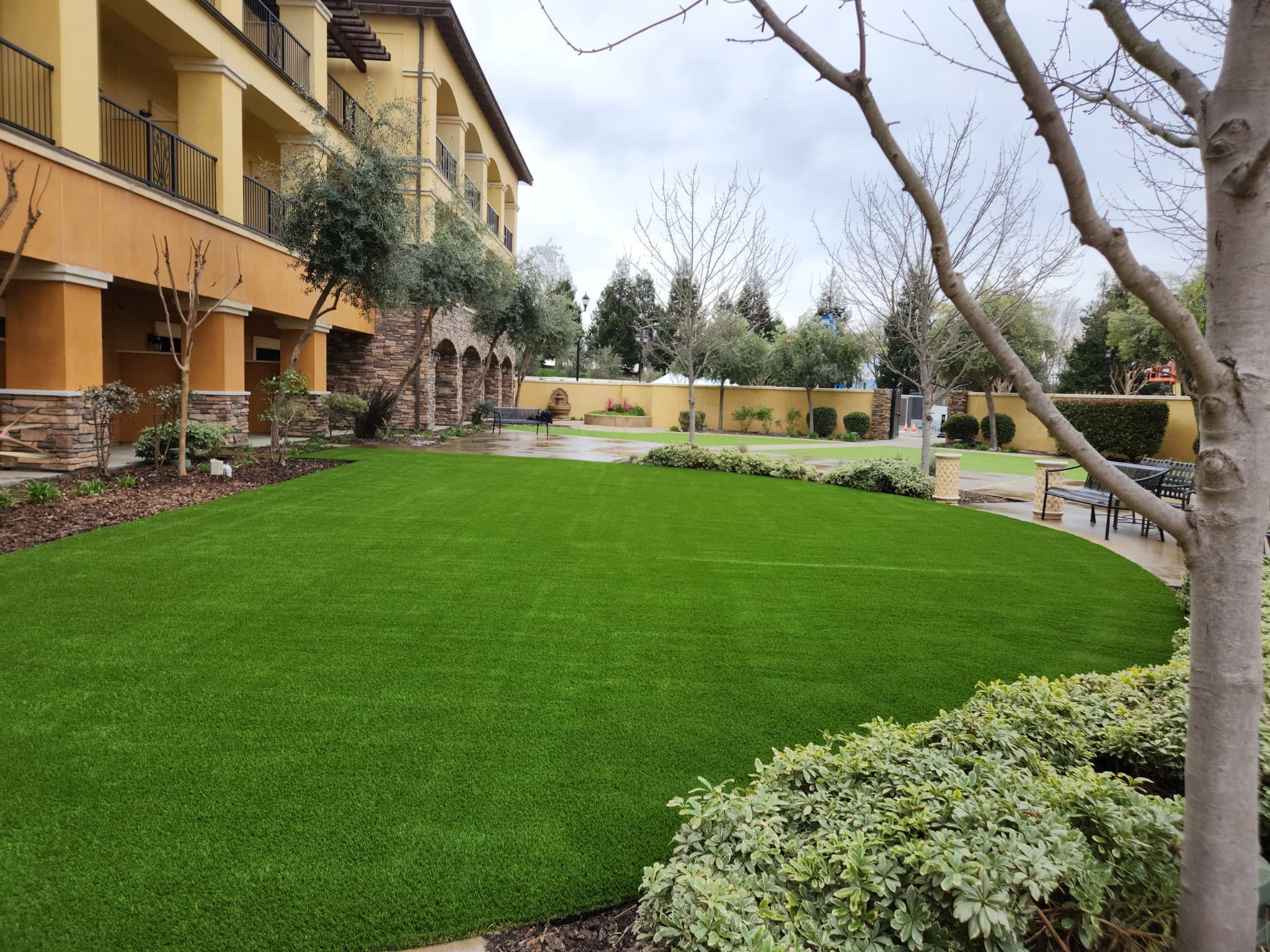
A patchy, compacted lawn usually isn’t a lost cause — it’s a soil and root problem. We renovate lawns through aeration, overseeding, and fresh sod, and when a thirsty lawn no longer makes sense, we install low-water turf or groundcover instead. Either way, the fix starts below the surface.
How we approach lawn renovation
- 01
Diagnose the soil
We check compaction, thatch, drainage, and sun before deciding renovate-or-replace.
- 02
Aerate & overseed
Core aeration relieves compaction; overseeding fills in thin, worn turf.
- 03
Sod or turf
Fresh sod for an instant lawn, or water-wise artificial turf where that fits better.
What’s included
Aeration & overseeding
The seasonal reset that thickens a struggling lawn.
New sod installation
Graded, amended soil and fresh sod for an instant, even lawn.
Lawn-to-turf conversion
Trade a high-water lawn for turf or groundcover to cut watering for good.
Timing tip: Fall is the prime window for lawn renovation in Northern California — cool nights and coming rains help new turf and seed establish before summer stress.
Lawn Renovation — common questions
When should I renovate my lawn?
Fall is ideal in our climate, with spring a close second. Aeration and overseeding land best when temperatures are mild and moisture is coming.
Should I keep my lawn or switch to turf?
It depends on how you use the space and your water goals. We’ll give you an honest read after seeing the site — sometimes a renovation is the right call, sometimes conversion is.