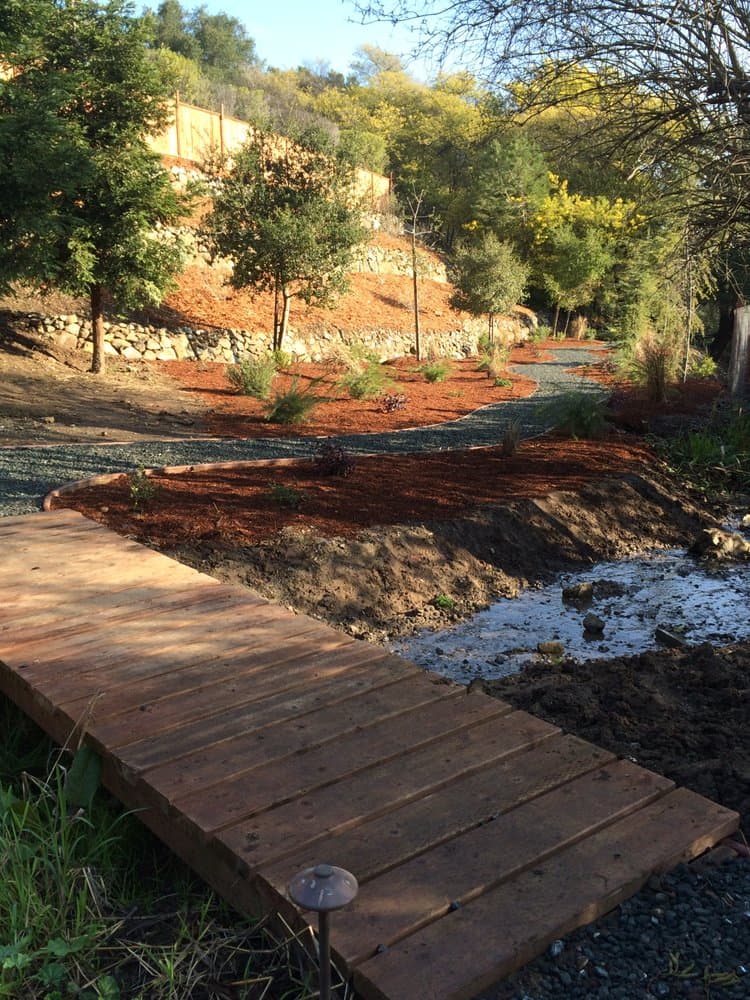
Bay Area winters arrive fast, and yards built on the region’s heavy clay soils pond, saturate, and push water toward the house when drainage is an afterthought. We solve standing water at the source — regrading, French drains, catch basins, and storm-water routing that carry runoff safely off the property and protect your foundation and hardscape.
How we approach drainage & french drains
- 01
Find where water goes
We read the grade and soil to trace where water collects and why it isn’t leaving.
- 02
Regrade & capture
Surface regrading and catch basins move water off patios, lawns, and low spots.
- 03
French drains
Perforated pipe in gravel intercepts subsurface water and carries it to a safe outfall.
- 04
Route it away
Downspouts, area drains, and drain lines discharge well clear of the foundation.
What’s included
French drain installation
The go-to fix for saturated soil, soggy lawns, and water migrating toward the house.
Standing-water solutions
Catch basins and regrading for patios, side yards, and low spots that never dry out.
Storm-water management
Downspout and area-drain systems sized for real NorCal winter rainfall.
Timing tip: The best time to install drainage is late summer and early fall — before the first storms, while the ground is dry and workable. Waiting until it’s already flooding limits the fix.
Drainage & French Drains — common questions
How much does a French drain cost?
It depends on length, depth, and where the water has to go — but we give a firm written estimate after reading the grade and soil on-site, and the assessment is free.
Why does my yard flood in winter but not summer?
Most Bay Area lots sit on dense clay that sheds water instead of absorbing it. Once winter saturates the soil, runoff has nowhere to go — which is exactly what a graded drainage system and French drains solve.